2026 Suffolk: Thursday 17th – Saturday 19th September
Itinerary / Overview: a 3 day birding trip to the East coast of Suffolk visiting the RSPB’s flagship bird reserve at Minsmere, and some of the beautiful and varied habitats of beaches and dunes, woodland, wetlands, heathland and estuaries. Defined as one of the premier birding locations in the UK.
Thursday: plan to visit some coastal venues on way to hotel – the likes of Fingringhoe, River Orwell Estuary and RSPB North Warren, Aldeburgh.
Friday: A full-day at RSPB Minsmere
Saturday: early morning revisit to Minsmere (pre-breakfast walk) and then Blyth Estuary and Dunwich Heath
Hotel: The Crown at Westleton, The Street, Westleton, Saxmundham, IP17 3AD. Please call 01728 648777.
Rooms: a selection of rooms have been reserved for single and shared occupancy and do range in prices dependent on the accommodation you decide to book (no rooms are the same).
We have agreed a discount if you confirm that you are booking on the Surrey Bird Club trip. Please quote “KOOKABURRA” when booking. We have also ensured that those that are booking a single occupancy room will have a discount supplement, as bookings are on a room basis rather than per person.
Please book Dinner, Bed & Breakfast.
Post-booking: once you have booked could you personally message Andy Harding (07884 063589 / ) to confirm you have done so.
Please note that the total number on the group will be 25.
NB: If you decide to stay for longer then you may not benefit from any further discount.
Travel: as with the Norfolk trip we may be taking the infamous Birders Bus, dependent on demand. Please advise how you plan to travel.
Now the Birds! Expectation of circa 100+ species over the three days taking in both remaining summer visitors and returning winter visitors, with the chance of rarities, especially at Minsmere.
Surrey Bird Club – Events Sub-Committee
Previous Trip: 2025 Norfolk: Thursday 9th – Sunday 12th October 2025
A great trip for the 26 Surrey Bird Club members, seeing 110 species over the 4 days with some wonderful experiences, typified by the RSPB Wader Spectacular at Snettisham. The full report is given below.
2025 Report : October 9-12th Norfolk
No. of attendees: 26 No. of species: 110
Species Highlights: Whooper Swan, Ruddy Shelduck, Garganey, Common Scoter, Common, Green & Curlew Sandpiper, Lesser Yellowlegs, Red-throated Diver, Glossy Ibis, Spoonbill, Great White Egret, Bearded Tit, Greater Short-toed Lark, Tree Sparrow
At last, the much-talked about trip arrived, with 26 SBC members heading towards the north Norfolk Coast via shared cars or the Birders Bus. The trip was split into 4 distinct days with trips, venues and target birds for each day and with bright, dry weather we were able to maximise daylight and not deviate from our plans.
Day 1 (Thursday): arriving at lunchtime at one of the most famous RSPB reserves, Titchwell Marsh, we knew we had the entire afternoon to explore, and with our hotel only 10 minutes away we could stay into the early evening.
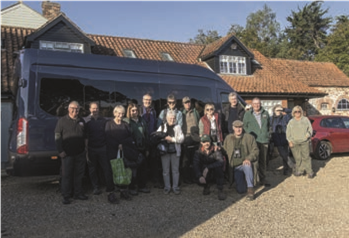
All aboard the Birders Bus (Gail Huckle)
We headed first to the east of the Reserve on the Autumn Trail, which allows you access to parts which are usually restricted. We could get quite close to the waders and waterfowl on the Freshwater Marsh with a good array of birds – most notably an elusive Curlew Sandpiper together with Pied Avocet, Northern Lapwing, Eurasian Curlew, Black-tailed Godwit, Ruff, 3 Common Snipe and a solitary Greenshank. Marsh Harriers were a constant, quartering the reedbeds with the huge flock of Golden Plover and Northern Lapwing regularly taking to the air, which was a magnificent sight. Plenty of wildfowl about with Greylag, Pink-footed and some Dark-bellied Brent Geese travelling over the Reserve with all the regular ducks in evidence.
Reaching the sea, at low tide, we were able to scan the exposed beach and could pick out Bar-tailed and Black-tailed Godwit, Eurasian Oystercatcher, Common Redshank, Ruddy Turnstone and singles of Common Ringed Plover and Sanderling. As always, the Reserve did not disappoint with 66 species seen or heard, which wasn’t a bad start for the trip.
Day 2 (Friday): for the super-keen birders, a very early walk along Old Hunstanton beach was taken before breakfast. With the tide rising rapidly, waders and gulls were being squeezed up the beach towards us. A Peregrine was spied sitting on a sand bar whilst a mixed group of Sanderling, Common Ringed and Grey Plover fought for what sand was left exposed.
A bit of sea watching yielded 4 species of gulls, some distant flocks of Common Scoter, a Red-throated Diver and a Common Guillemot. Whilst being pre-occupied towards the sea, there was a shout of “Spoonbill!” and a resplendent trio of these graceful birds flew over us!
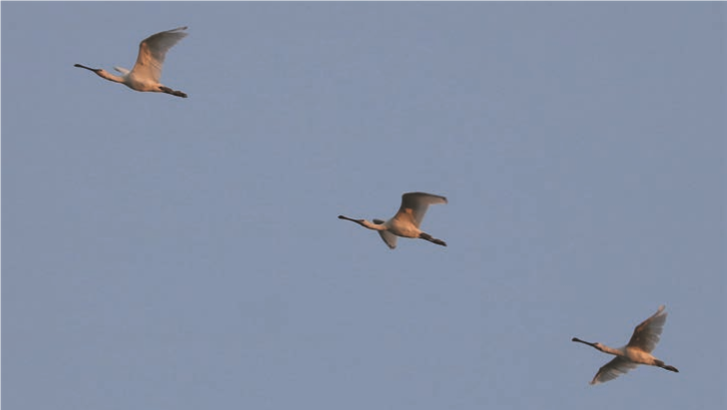
Eurasian Spoonbill, Old Hunstanton Beach ( Steve Paveley)
Back for a hearty breakfast and then off to Cley and Salthouse Marshes. Stopping first at Cley Coastguards beach for a further spot of sea watching, we managed to find a close-in Red-throated Diver on the sea, a Common Guillemot and 3 Razorbills flashing by and a group of 20+ Ruddy Turnstone on the shingle beach. We had heard that a Ruddy Shelduck was grazing in one of the fields alongside a flock of Egyptian Geese. Fortunately, it was easily found from the West Bank, on Cricket Marsh – a lifer for most.
Checking in at the Visitor Centre we made a bee-line for the hides with a plan to visit the four hides, come back for lunch and then head down the famous East Bank towards the sea again. Constantly listening out for the “ping” of the resident Bearded Tits (we eventually saw 2 or 3 later in the afternoon) we first visited Bishop’s Hide, where there were a good assortment of wildfowl and waders – the stars being the large flock of Black-tailed Godwit intermingled with Eurasian Curlew, Common Oystercatcher and Common Redshank. The ubiquitous Marsh Harrier constantly kept all the birds on their toes with Red Kite, Common Buzzard and Common Kestrel all seen together with a distant Peregrine later on a shingle ridge. Round to the three central hides where more of the same were seen, some birds being in very close quarters including some Ruff (a lot were seen throughout the trip).
After lunch on the Centre’s terrace, we walked the mile or so along the East Bank. Looking back towards the field adjacent to the Centre, we all remarked on how many Pink-footed Geese were grazing in the field and, amazingly, 3 Whooper Swans! As we watched them through scopes, the Pink-feet went up en masse and flew straight over the Reserve – what a sight! We all remarked that also seeing 7 Cattle Egrets in the field adjacent to the path now wasn’t that special given they have become a regular bird particularly around our coast, especially in the South.
It got quite cold by the late afternoon, so we all decided to head back to the comfort of Caley Hall, for a much-needed shower and an aperitif before dinner. A chance to also reflect on the birds we had seen during the day – everyone was enthralled with what we had managed to see.
Day 3 (Saturday): Up very early, meeting by the Birders Bus at 05.45 (yes I know!!) as we needed to be parked up and, with an hour’s walk, to be in position at Snettisham Beach to see the much-awaited Wader Spectacular – probably for many (including me) one of the highlights of our birding lives! The sheer number of birds was staggering – as the tide started to rise at an increasing rate, the gathering flocks of Eurasian Oystercatcher, Grey Plover, Red Knot, Black -tailed and Bar-tailed Godwit, Dunlin, Common Ringed Plover and Eurasian Curlew combined all marching up the beach (especially the Oystercatchers) with mixed flocks of birds taking to the skies in the famous huge murmurations. You really didn’t know where to focus. Even more action with a pair of Peregrines attacking the flocks of waders, with Marsh Harriers and Red Kites keeping to the edges waiting to pounce on any disorientated birds. With all this happening we almost missed the 10 or so Great White
Egrets far out on the beach, 3 Eurasian Spoonbills flying over, 3 Whooper Swans, a passing Common Kingfisher and the huge numbers of Pink-footed Geese flying over in their characteristic skeins. As the tide got higher birds started piling into the main Reserve, flying over probably 500 onlookers. An extraordinary morning made all the better in finding that our hotel had our delayed breakfast waiting for us on our return. Special commendation to Louise Kahan for self-finding a Red-necked Phalarope on her way back to the car park.
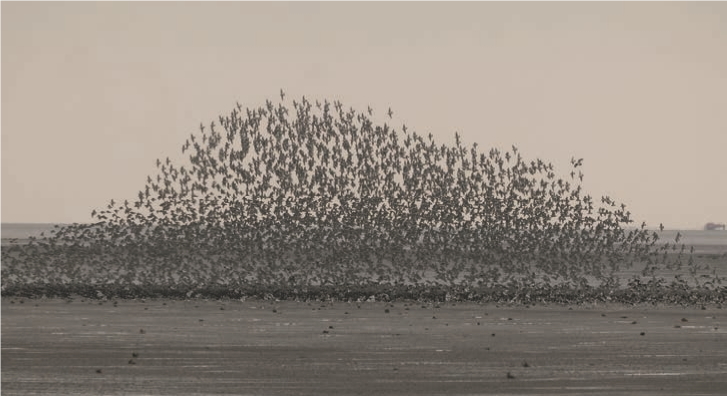
Wader Spectacular, Snettisham (David Philips)
After breakfast we headed to Holkham Beach, but first a spot of twitching! Having heard a Glossy Ibis was at Stiffkey Marshes we headed straight there with the mission to find one of the many Ibis that were in the country at this time. After getting directions from a helpful birder, we were soon marvelling at this iridescent bird, showing really well within 20 yards from the path. A quality bird!
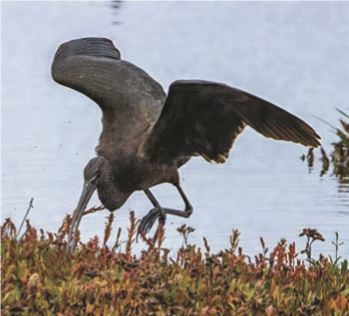
Glossy Ibis, Stiffkey Marshes (Steve Casson)
Off to Holkham Beach, parking in Lady Anne’s Drive. As always, a spectacular view from the boardwalk over this extensive beach, but probably the only real disappointment of the trip in terms of the lack of birds. Despite this we added Eurasian Treecreeper, Great Spotted Woodpecker, Common Chiffchaff and Goldcrest to our list.
Getting the taste for some more twitching, some of us decided that, once we got back to the hotel, if anyone fancied a visit back to Snettisham Beach to try for the very elusive Greater Short-toed Lark, then now was the time! With a full Birders Bus, we hurried back to the car park, where not 10 hours ago we had first parked, and within 10 minutes we were all marvelling at this classic LBJ (Little Brown Job). How it was originally found was beyond us, but we were all very pleased with ourselves on relocating it and it was a lifer for us all (at least in the UK).
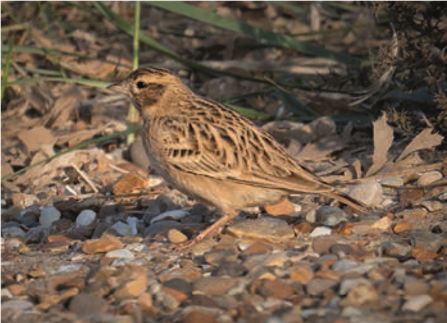
Greater Short-toed Lark, Snettisham Beach (Sally Seager)
After a thorough debrief on the day’s events and an excellent meal, Scott treated us to a fabulous quiz, which kept us thinking and laughing in equal measures!
Day 4 (Sunday): sadly, our final day – it had gone so quickly. However, we still had a trip to WWT Welney to enjoy, but first an intrepid group went back to Titchwell Marsh before breakfast to test our bird song / calls in the fog! We heard more than we saw, including a solitary Bearded Tit but some did get a good view of a Water Rail. Despite the fog we saw or heard 35 species in just under 2 hours.
Off to WWT Welney but not before we had our final twitch of the trip – to a housing estate just outside King’s Lynn! Amazingly in a fenced-off balancing pond we found Black-tailed Godwit, a Grey Wagtail, 4 Common Snipe, a Green Sandpiper and most exciting – a Lesser Yellowlegs! We all got great views of this stunning North American vagrant.
Final stop Welney. The usual Tree Sparrows were not so numerous but we all got to see a couple on the feeders. Now a common theme of Cattle Egret, Whooper Swan, quartering Marsh Harrier and flocks of Golden Plover greeted us, but Welney can always present the unexpected. This time in amongst the large number of Eurasian Wigeon, Eurasian Teal and Northern Shoveler, the WWT guide pointed out a female Garganey, which was late for this traditionally summer visitor, but very welcome to those that could add to their list. Again more Ruff, a posing Common Kingfisher and a fly-over Goosander made for a great finale to a superb trip.
Last goodbyes and then off home, with the thoughts of Lesser Yellowlegs, Greater Short-toed Lark and Glossy Ibis resonating alongside all the amazing classic Norfolk birds we had encountered, optimized by the privilege of witnessing one of nature’s spectacular events at Snettisham. what could be better? A fantastic trip with great company, a very comfortable stay at the Caley Hall Hotel and superb birds in one of the best birding locations in the UK – what could be better?
Where next in 2026?
Andy Harding
| Brent Goose | Coot | Lesser Black-backed Gull | Bearded Tit |
| Canada Goose | Little Grebe | Guillemot | Skylark |
| Greylag Goose | Great Crested Grebe | Razorbill | Greater Short-toed Lark |
| Pink-footed Goose | Oystercatcher | Red-throated Diver | Cetti’s Warbler |
| Mute Swan | Pied Avocet | Gannet | Long-tailed Tit |
| Whooper Swan | Grey Plover | Cormorant | Chiffchaff |
| Egyptian Goose | Golden Plover | Glossy Ibis | Goldcrest |
| Ruddy Shelduck | Ringed Plover | Spoonbill | Wren |
| Shelduck | Lapwing | Little Egret | Treecreeper |
| Garganey | Curlew | Great White Egret | Starling |
| Shoveler | Bar-tailed Godwit | Cattle Egret | Redwing |
| Gadwall | Black-tailed Godwit | Grey Heron | Blackbird |
| Wigeon | Snipe | Marsh Harrier | Robin |
| Mallard | Common Sandpiper | Red Kite | Stonechat |
| Pintail | Green Sandpiper | Buzzard | Tree Sparrow |
| Teal | Redshank | Tawny Owl | House Sparrow |
| Pochard | Lesser Yellowlegs | Kingfisher | Dunnock |
| Tufted Duck | Greenshank | Great Spotted Woodpecker | Grey Wagtail |
| Common Scoter | Turnstone | Kestrel | Pied Wagtail |
| Goosander | Red Knot | Peregrine | Meadow Pipit |
| Pheasant | Ruff | Jay | Rock Pipit |
| Red-legged Partridge | Curlew Sandpiper | Magpie | Chaffinch |
| Feral Dove | Sanderling | Jackdaw | Greenfinch |
| Stock Dove | Dunlin | Rook | Linnet |
| Woodpigeon | Black-headed Gull | Carrion Crow | Goldfinch |
| Collared Dove | Common Gull | Coal Tit | Reed Bunting |
| Water Rail | European Herring Gull | Blue Tit | |
| Moorhen | Great Black-backed Gull | Great Tit |