
Field Meeting Reports 2025
WWT London Wetlands Centre – Sunday 14 December 2025
No. of attendees: 33 No. of species: 55
Highlights: Egyptian Goose, Goldeneye, Common Snipe, Eurasian Bittern, Red Kite, Chiffchaff, Cetti’s Warbler, Redwing, Eurasian Siskin, Reed Bunting
Our annual visit to the “Barnes Wetlands” never disappoints. With the extensive hides, plenty of WCs and a decent café, coupled with a good selection of birds and the chance of a few rarities, what is there not to like?
We had a large number of members on this trip so we split into three groups and headed off in differing directions but did share sightings and it seems that everyone got to see most birds.
This account is from my group. From The Discovery Hide, we soon latched onto the male Goldeneye which showed well throughout the morning.
There were plenty of passerines in the trees with a flock of Siskins seen on the way to the Wildside Hide. At the Reservoir Lagoon, we had a good selection of waterfowl with Teal, Pochard, Tufted Duck, Gadwall and a Greylag Goose. Scanning the reedbeds, our hope was to find one of the two Eurasian Bitterns that had been reported, but almost simultaneously, via our Group Whatsapp – message: “Bittern showing well from WWT Hide”. Great views of this iconic bird were had by most both from both WWT and Peacock Hides during the morning.
At the feeders there was lots of activity with Chaffinch, Greenfinch, Dunnock and Long-tailed, Blue, Great and Coal Tits seen (with a strong supporting cast of Brown Rats on the cage floor). Working our way around the Sheltered Lagoon we added Redwing, Song and Mistle Thrush, Great Crested Grebe, Mute Swan, Green and Great Spotted Woodpecker.
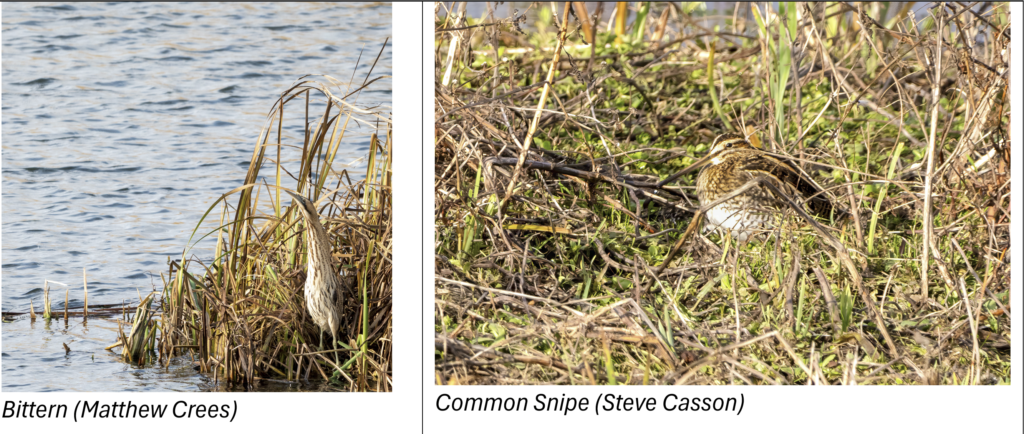
From the Peacock Hide, we managed to find the elusive Common Snipe along with Pied Wagtail, Little Grebe, Lesser Black-backed Gull, Lapwing and Grey Heron.
A great morning culminating in a warm drink and lunch.
Andy Harding
Richmond Park –Tuesday 25 November 2025
No. of attendees: 15 No. of species: 36
Highlights: Peregrine Falcon, Kestrel, Grey Wagtail, Stonechat, Goldcrest
With the slight curve ball of the Pen Ponds café having no power, some of us grabbed breakfast at the café at Roehampton Gate before meeting everyone back at the Pen Ponds.
A great morning in one of London’s most famous parks ably guided by Nigel and his friends Roy and Paula – thanks to them. The route centred around the Pen Ponds giving us a great insight into the improvement works that have been undertaken to the Ponds.
Heading across Lawn Field and alongside Duchess Woods, we all stopped to marvel at the fabulous iconic Red Deer, the males resplendent with their antlers still intact but soon to be shed.
Finding a few Stonechat, we were hopeful of finding a Dartford Warbler or two but no joy. Still had Meadow Pipit, Green Woodpecker and plenty of Ring-necked Parakeets as we walked towards the Lower Pen Pond. Little on this pond, save for Mallard, Tufted Duck, and a pair of very friendly Egyptian Geese, but once we reached the larger “pond” we had an excellent selection of birds including Black-headed Gull, Canada Goose, Mute Swan, Coot, Great Crested Grebe and Cormorant. Making our way around the perimeter, Roy picked out a fabulous-looking Grey Wagtail and then further along the same route, a Peregrine Falcon – on sentry duty in a tree. Apparently this is one of its usual perches – great views in the scope.
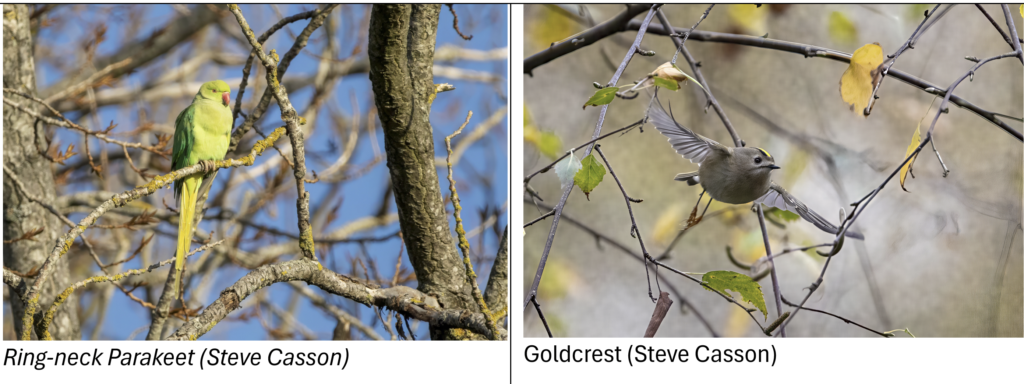
A great spot of a Kestrel in the trees on our walk into Isabella Plantation – in the hope of some woodland birds. Wasn’t as bird-busy as we had hoped but still had Great Spotted Woodpecker, Goldcrest and 4 species of tits.
An enjoyable walk with experienced guides, good company and some interesting birds giving great views.
Andy Harding
RSPB Pagham Harbour Nature Reserve –Sunday 16 November 2025
No. of attendees: 20 No. of species: 78
Highlights: Morning – Pied Avocet, Sparrowhawk, Marsh Harrier, Gannet, Common Scoter, Red Knot, Kingfisher
Afternoon – Spotted Redshank, Cattle Egret, Black-tailed Godwit, Rock Pipit, Stonechat, Woodcock
Always a Reserve full of birds, especially in the winter, this trip probably broke our record of most species in a day with some truly great sightings.
We started spotting birds in the car park with the usual finches and tits around the feeders, and a Sparrowhawk and Redwing on our way to the Ferry Pool hide. In truth the Ferry Pool wasn’t full of birds as usual (it had just had some extensive improvement works completed) but Shelduck, Teal, Shoveler in numbers with a few Black-tailed Godwits and Pied Avocets; the best bird being a Green Sandpiper close-in.
Up the west side of the Reserve with Curlews, Redshanks and Oystercatchers moving through the channels and Skylarks and Meadow Pipits in the fields. A Kingfisher flashed along the field-side stream with Cetti’s Warbler calling from the gorse.
Large flocks of Dark-bellied Brent Geese, Lapwings, Woodpigeons and about 400 Golden Plovers filled the huge skies as we got close to Church Norton. Little to be seen in the graveyard, but some great birds on the shingle across the harbour – Grey Plover, Redshank, Ruddy Turnstone, Red Knot, Dunlin with a supporting cast of Mediterranean, Great Black-backed and Common Gull on the islands.
Getting to the sea, we didn’t spend too long sea-watching but we did see a flock of about 10 Common Scoter, a few Great Crested Grebes and some distant Gannets.
Same route back with a very confiding male Sparrowhawk near the Reserve Centre and Marsh Harriers and Common Buzzards constantly in the skies.
A quick lunch and then a good number of us headed to the North Wall.
Whilst many of the same species were seen, we were heartened to find the now breeding colony of Cattle Egrets,some really close-in views of Marsh Harriers and a great sight of a pair of Spotted Redshanks feeding in one of the channels – everyone getting good views. As we walked back, we had 3 Common Snipe showing well and some saw a flushed Woodcock.
A brilliant day with everyone going home satisfied with experiencing some tremendous sights and sounds of Pagham Harbour.
Andy Harding
RSPB Cliffe Pools – Sunday 26 October 2025
No. of attendees: 25 No. of species: 58
Highlights: Pied Avocet, Curlew, Black-tailed Godwit, Greenshank, Dunlin, Sparrowhawk, Marsh Harrier, Skylark, Chiffchaff, Cetti’s Warbler, Redwing,
Despite a challenging day of chilly winds and distant birds, it still made for an excellent walk with great company, particularly in the knowledge that Peter had organized an excellent pub lunch at the nearby Bell Inn at the end of the walk.
Starting from the car park we made our way to various lookouts over Radar Pool. Thankfully there were sufficient scopes to help pick out some of the birds sheltering from the wind! Pied Avocet, Redshank, Lapwing, a well-found sleeping Black-tailed Godwit and a group of Greenshank made up the wader contingent with Little Grebe, Mute Swan, Shelduck (of which there were many), Shoveler, Wigeon and Teal making up the principal wildfowl.
Turning back to walk through the myriad of paths we passed the south side of Radar Pool with Crystal Pool to our south. Chiffchaff, Goldcrest and some usual passerines were seen and heard as we headed for the River Thames. With the biting wind we decided not to head to the main river, but we found plenty of birds in large numbers – Linnet, Meadow Pipit, Starling and Skylark (of which there many). At least 5 Marsh Harriers were seen throughout the morning along with Kestrels and Buzzards.
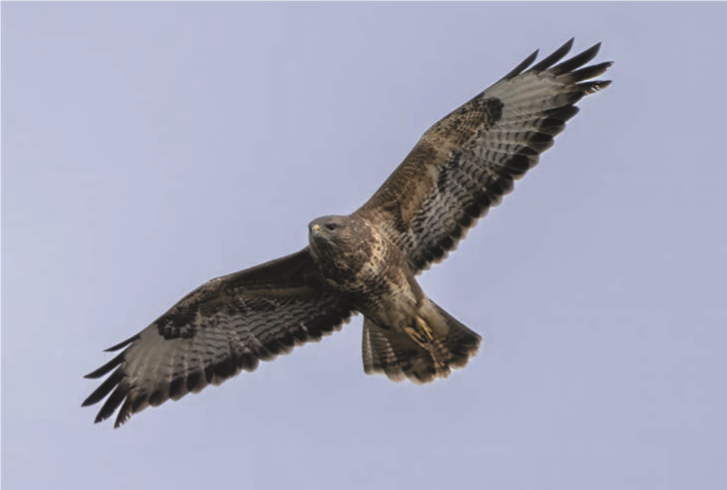
Photo: Common Buzzard ( Steve Casson)
Heading back towards the car park some decided to have one last look at the Radar Pool. Hovering Buzzards, Kestrels and a passing Sparrowhawk were seen as we left the car park and on arrival at the lookout we had a pair of Curlew, another Greenshank, a larger flock of Lapwing with both Redshank and a solitary Dunlin. A pair of Egyptian Geese also flew in.
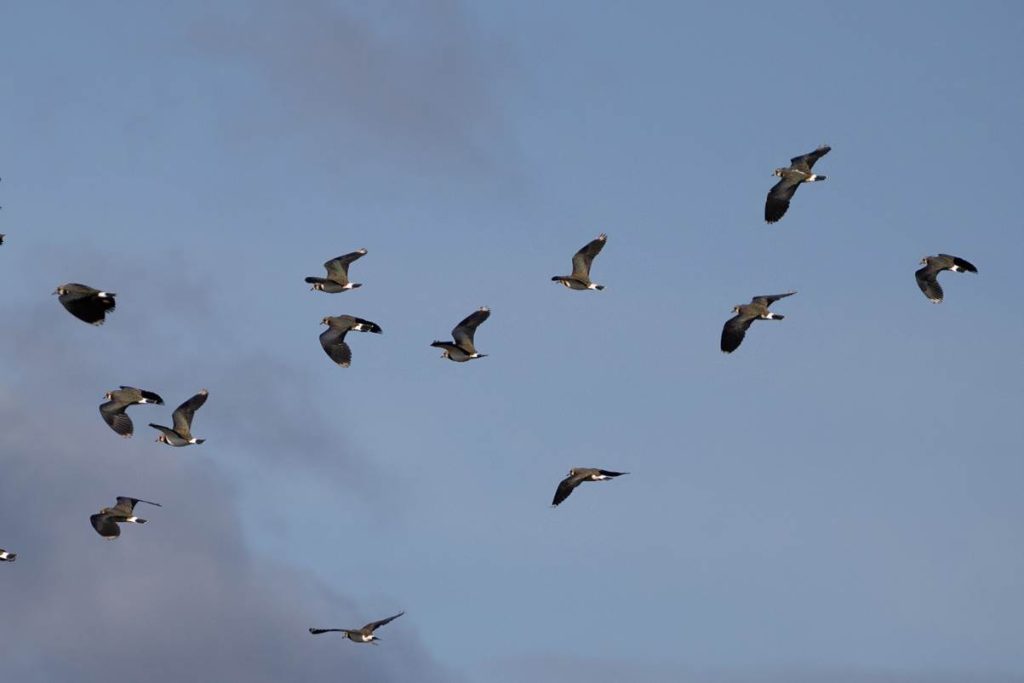
Photo: Lapwings ( Steve Casson)
Off to The Bell Inn for an excellent lunch rounding off an excellent birding morning on the North Kent coast.
Andy Harding
Beddington Farmlands – Thursday 16 October 2025
No. of attendees: 20 No. of species: 60
Highlights: Common Snipe, Green Sandpiper, Sparrowhawk, Kingfisher, Hobby, Peregrine, Barn Swallow, Cetti’s Warbler, Redwing, Fieldfare
As always a huge thanks to Charlie Owens, the Reserve’s warden, for giving up his time to guide the group around this iconic inner London reserve. Also, thanks to the Beddington Farmlands Bird Group, who were also on site helping our group onto site and for picking out some of the birds!
Entering via South Gate, we stopped off at the first hide to pick out Little Grebe, Grey Heron, Tufted Duck, Shoveler and Gadwall, with some mobile flocks of Long-tailed Tits accompanied by both Blue and Great Tits in the scrub. Cetti’s Warbler and Chiffchaffs were calling along the path.
Along the top to overlook Phase 3, plenty of Teal were feeding in the shallows and after further scanning a pair of both Common Snipe and Green Sandpiper appeared, the latter a real speciality on the Reserve. Further time spent both in the Phase 3 hide and overlooking the Enclosed Lagoon yielded more Little Grebes and large number of Coots.
Over The Mound, the Starling flocks were evidently growing in numbers as they wheeled around in front of us. The baubling flight call of Skylarks was heard amongst the large number of corvids, mainly Carrion Crow but intermingled with Jackdaws. Winter thrushes were starting to show with both Redwing and Fieldfare seen along with both Song Thrush and Blackbird.
From The Mound, the Vis-Mig Hide allows views over the North Lake and further north, giving a great opportunity both to scan for signs of both migration but also to identify any raptors – in this case a late Hobby and the resident Peregrine, with Kestrels being seen regularly. A high-pitched “peep-peep” and a Kingfisher came into view – always a special bird!
Heading over The Mound towards the Incinerator gave us the chance to walk the MEC channel, home to breeding Grey Wagtails and Stonechats – both showing well. Back on the path to the North Lake Hide for better views of the Kingfisher, with Little Egret, Cormorant, Great Crested Grebe, 4 species of gull and a Pochard. Out via the South Gate with a group of us finishing with a drink at The Duke’s Head (thanks for organising Peter). An enjoyable morning with a vast array of birds seen, all within the shadows of Croydon!
Andy Harding
Farlington Marshes – Sunday 14 September 2025
No. of attendees: 14 No. of species: 69
Highlights: Barnacle Goose, Pintail, Water Rail, Common, Wood & Curlew Sandpiper, Little Stint, Cattle Egret, Marsh Harrier, Peregrine, Whinchat, Northern Wheatear. Yellow Wagtail
One of the Club’s “go-to” venues, which offers the chance to see a very good array of birds in an easy-walking and unhurried environment. Tides do play a big part in what you are going to see and how close, but despite the mudflats being fully exposed at low tide, many waders and wildfowl thankfully were remaining on the inside of the Reserve. Visiting at the peak time of autumn migration gave us the chance to see some elusive birds which can be seen at Farlington Marsh – if we were lucky (and we were!).
Taking a slightly different route, we headed for The Stream, with the extensive reedbeds behind to seek out sheltering waders. Good numbers of hirundine in the shape of both Barn Swallow and House Martin were swooping over the reedbeds, feeding up before their travels south. Making our way along the path adjacent to the water, we soon found Oystercatcher, Lapwing and Common Redshank. In amongst them was an avidly feeding, bobbing small wader – a Common Sandpiper. Even more exciting was a pair of Curlew Sandpipers – longer-necked and slightly larger than a Dunlin with a characteristic down-curved black bill and a hint of an eye stripe.
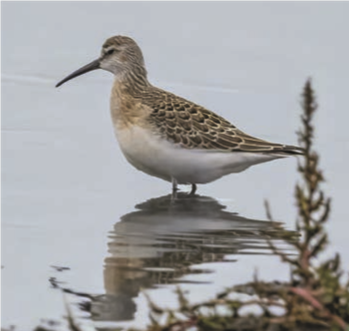
Photo: Curlew Sandpiper (Steve Casson)
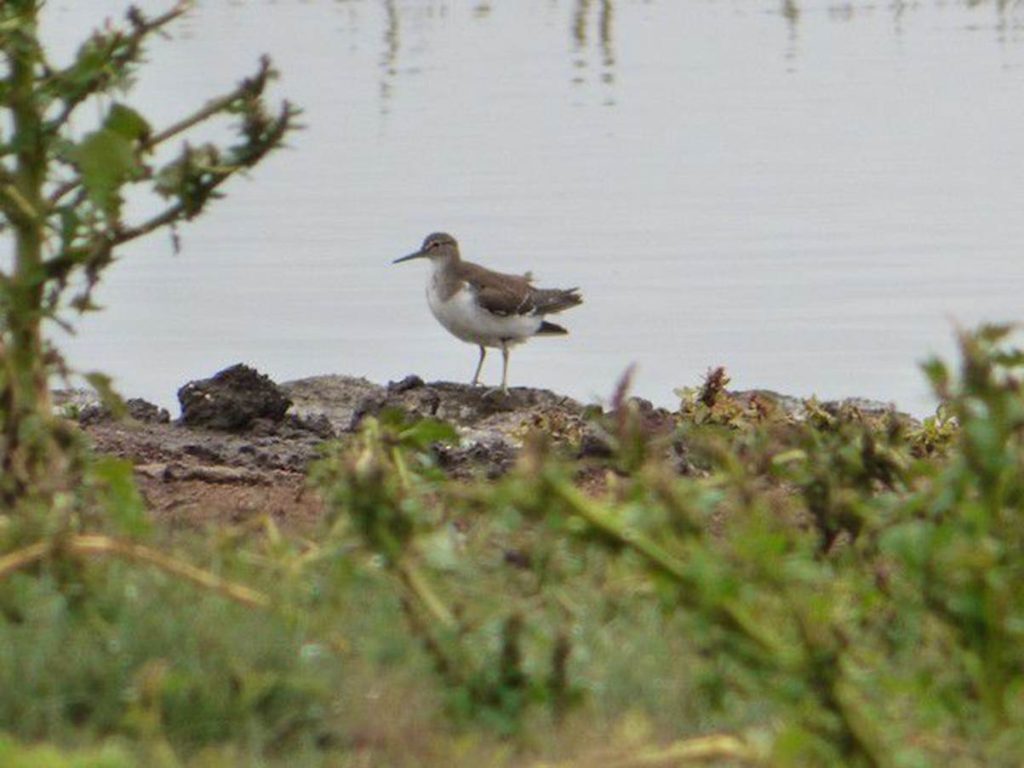
Photo: Common Sandpiper (Jack Taylor)
Someone shouted “large raptor”! and in the mid-distance we got a fleeting glimpse of a Marsh Harrier, with our attention immediately turning to a pair of Peregrines sitting on a post and on the ground, with a Buzzard close by.
Further along the Stream amongst the low-cut reeds there were a few feeding waders, which were difficult to make out to begin with. They were feeding Redshanks, but a slightly smaller, brown/white mottled plumaged, elegant bird was also feeding. Once we got our scope on it, we could make out that it was a Wood Sandpiper – a bird recorded along the coast over the last few days; so very pleasing to find one for ourselves. For some, the sight of the elusive Water Rail was as exciting, and rightly so seeing it within a few metres of the Sandpiper.
Up onto the breakwater path and a chance to look over The Lake. Good numbers of ducks with Teal, Wigeon, Gadwall, Mallard and 4 Pintail were seen, but the star of the show was a pair of diminutive Little Stints. Absolutely cracking birds and always difficult to find. As we headed round to The Point, we continually checked the posts for chats and the ground around the cattle’s feet for wagtails, finding pairs of both Whinchats and Wheatears. with Yellow and Pied Wagtails feeding in the fields.
Scanning the mudflats birds were spread over a wide area but we could make out many Curlew, Grey Plover, Shelduck, and a variety of gulls. As we completed the circuit, we reminded ourselves that it is always sensible to scan the fields to check for anything that may have been missed earlier – in this case 10 Western Cattle Egrets and a sole Barnacle Goose in with the Canada Geese.
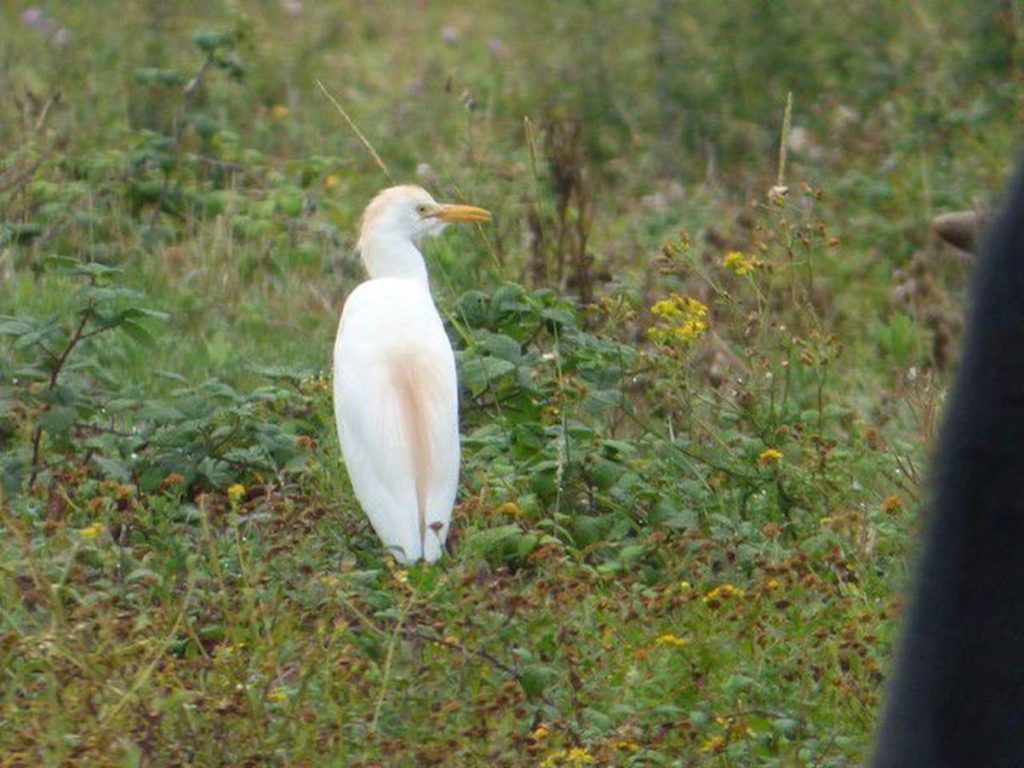
Photo: Cattle Egret (Jack Taylor)
A fantastic morning with a great group of birders, all of whom contributed to the final count of 69 species!
Andy Harding
Guildford and River Wey- Sunday 31st August 2025
On another beautifully sunny day 11 people met for the second field trip for people new to birdwatching.
Dave Kiddell started things off by spending a few minutes talking about the pros and cons of different types of binoculars as well as discussing the idea of spending time looking at birds using only your eyes rather than always reverting to using binoculars. This allows you to see how birds initially appear to you, how they fly and associate with other birds around them which can help you spot the difference between similar looking species – such as separating a Jackdaw from Carrion Crow. Once you have obtained this skill, it can let you see something that may be different such as Rook or Raven.
This is Steve Casson’s local patch so he kindly set off to show us around. We walked beside the River Wey where c40 Swallows were feeding across the far bank. A few people were lucky enough to briefly hear and see a Kingfisher. On reaching the dump, many Gulls could be seen sitting on the roof and flying around. We spent some time trying to identify the various plumages of Herring Gulls in their first, second and third years as well as full adults. Some Black Headed and Lesser Black Backed were also seen. Both Great Cormorant and Red Kite were seen flying over.
At the lake were 2 Greylag, some Canada Geese and a very strange cross-Canada like bird. We had good views of a pair of Stonechats in the surrounding field which allowed useful comparisons to be made between them.
Another very enjoyable trip with 23 species seen.
Hersham Ringing Gp, Queen Mary Res. – Saturday 23 August 2025
No. of attendees: 20 No. of species: 46
Highlights:
- Ringing Demo: Sedge, Reed & Cetti’s Warblers, Lesser & Common Whitethroat, Willow Warbler, Chiffchaff, Common Redstart, Whinchat
- On Reservoir: Egyptian Goose, Common Sandpiper, Sparrowhawk, Red Kite, Hobby,
What a brilliant morning! Huge thanks must go to Tony Beasley and his superb team of ringers who were so knowledgeable and helpful, as we got to grips with moults, ageing and identification characteristics of a host of birds that they caught during the morning. Discussions around the changing migration patterns, population fluctuations and survival rates were enthralling and certainly captured the interest of our group.
On meeting Tony at the gate, he hinted that they had already had a steady flow of birds and there were one or two unexpected captures. He didn’t disappoint! Seeing close-up the more familiar species such as Blue, Great and Long-tailed Tit, Blackbird, Dunnock and Robin was a real privilege and helped us all appreciate them all much more with their intricate plumage detail and delicate features.
To also have identified the key characteristics of Chiffchaff versus Willow Warbler and Common Whitethroat versus Lesser Whitethroat will undoubtedly help us all when in the field, when we cannot rely on calls and song. Of special note was the experience of seeing elusive birds like Cetti’s Warbler, Common Redstart and Whinchat up close. Difficult birds to find and identify at the best of times, but to observe them at this range was amazing.
As is always the routine when we go to the ringing demonstration, we get to walk the steps to the look-out at the Reservoir. This was a 15-minute scan before we left, and we weren’t disappointed with superb views of a pair of Hobbies hunting close by. Other raptors seen during our morning were Sparrowhawk, Red Kite, Kestrel and Buzzard. The morning was completed with a pair of Common Sandpipers showing well directly in front of us.
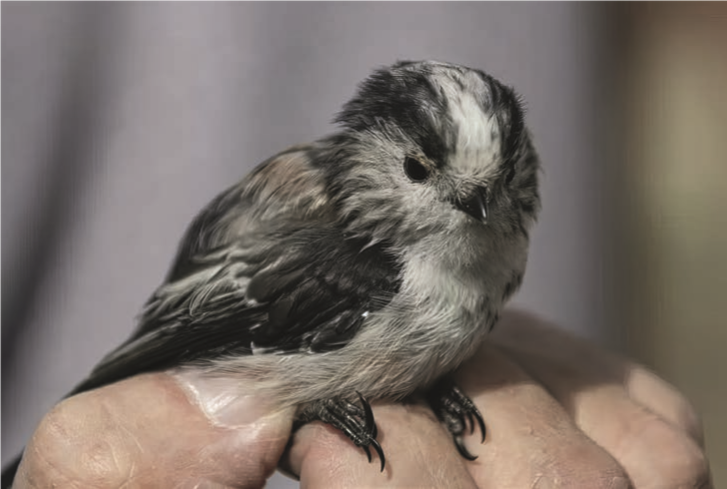
Photo: Long-tailed Tit ( Gail Huckle)
A unique morning of ornithology in several differing guises!
Andy Harding
Ashtead Common – Sunday 18 May 2025
This was the first field trip for people new to birdwatching. On a beautifully sunny day 6 people, both members and non-members met by Ashtead Station. Among the group there was a level of expertise from absolute beginner to those wanting to improve their basic skills, so we spent the first few minutes talking through the basic skills of birdwatching as well as covering the pros and cons of different types of binoculars. We then moved on to start identifying some the more common species, such as separating Crows from Jackdaws, and Woodpigeon from Feral Pigeon of which there were plenty around!
We spent time trying to identify birds by sight by trying to gauge their look and feel, a technique often to referred to as their ‘Jizz.’ We also talked about trying to birdwatch as much as you can to learn the basics which will lead to more confidence.
Altogether a thoroughly enjoyable couple of hours in great company with the total of species seen or heard (*) being 25:
| Feral Pigeon | Common Woodpigeon | Carrion Crow | Jackdaw |
| Common Whitethroat | Blackcap | Long Tailed Tit | Eurasian Jay |
| Eurasian Blackbird | House Sparrow | Robin | Eurasian Wren |
| Common Magpie | Collared Dove | Ring Necked Parakeet | Swift |
| Swallow | Common Buzzard | Dunnock | Song Thrush |
| Eurasian Goldfinch | Eurasian Blue Tit | Great Tit | Common Chiffchaff |
| Cuckoo * | |||
Dave Kiddell
Lymington – Keyhaven Nature Reserve – Saturday 12 April 2025
Probably our most ambitious and longest journey for the 19 SBC members, but on a beautiful Spring day we were not disappointed. Splitting the day into two visits; the plan was to visit Normandy Marsh at the Lymington end first thing, with the afternoon walking the Keyhaven to Pennington loop.
As usual the nature reserve at Normandy Marsh was a hive of activity with birds singing as soon as we reached the path: Cetti’s, Chiffchaff, Reed Bunting, Goldfinch, Wren and Greenfinch all made themselves heard. As we looked right on to the main Reserve it was difficult to know where to focus first with so much going on. Avocets were everywhere (we think we saw a minimum of 120 in the day) with many already on eggs, as were Lapwings. Plenty of wildfowl were still in evidence including 3 late Dark-bellied Brent Geese with 2 Egyptian grazing with the Canadas. Waders were in evidence, especially as there was a high tide pushing many of the birds across the sea wall into this safe haven, with Ruddy Turnstone, Dunlin, Black-tailed Godwit, Oystercatcher and Ringed Plover feeding avidly. Of note was a single Greenshank in the shallows close to a Bar-tailed Godwit going into summer plumage (there were 4 more on the seaward side but distant). One of our very observant members picked out 3 roosting Eiders on the saltmarsh with 3 more seen on the sea further round the seawall path. Gulls and terns were busy courting, displaying, feeding and squabbling – with a good number of Common Terns showing on Tern Island along with 3 superb Little Terns – what a great bird! Gulls were also in residence including, amongst the Black-headed, a few Mediterranean in all their fine crisp summer plumage. As we walked back to the cars, we found Whitethroats singing, a male Bullfinch, Sand Martins and a solitary Swallow. A good start with 58 species seen.
Onto Keyhaven with a stop off at the Milford Conservation Avon Flood Observatory: a weird juxta-position with brackish and saltwater inlet and lagoon side by side. A good number of birds were on the brackish Avon Flood with Avocet, Blacktailed Godwit, Shelduck, Teal and Gadwall being the primary species with a pair of quartering Marsh Harriers over the far reedbeds. Onto the sea wall and whilst making our way passed Iley Point and onto Keyhaven Lagoon, we had a pair of Sandwich Terns on a buoy. Further along there was a stationary flock of Great Black-backed Gulls numbering at least 10. A few Meadow Pipits were calling along with the ever-present Linnets. With the lagoon drying out, the water depth was perfect for the longer-legged waders and so the Avocets were feeding in abundance. 20+ Mediterranean Gulls were also showing well. Fishtail Lagoon, which normally is the harbinger of a rarer wader or duck, yielded very little other than a solitary Snipe and even more Avocets! As we walked along the path we could see two large white birds across the reedbeds to Butts lagoon, soon to be identified as a pair of Spoonbills (an adult and juvenile). To add to the excitement, there were a fishing Little Tern, a pair of Ravens which flew right above us (showing their distinctive diamond-shaped tail), a Red Kite in the distance and large numbers of Great Crested Grebes on the sea. Gradually making our way back along the Ancient Highway, still with an expectation to see even more species, we found very little of note until we got back to the Avon Flood where we all heard (but not all saw) a pair of early Reed Warblers. and, for some, the final bird of the day was a Little Ringed Plover on the dried-out saltpan back at the Observatory. A long but very exciting day’s birding with a total 84 species seen or heard.
Dungeness Bird Observatory & RSPB – Wednesday 26 March 2025
A planned trip to the famous Dungeness Observatory and Reserve had been on the cards for a few years and very pleased that we finally got this on the calendar. 19 SBC members made the trip, meeting by the lighthouse early, to start with some classic sea-watching. Over the first hour or so, we had a good list of birds including Common Scoter, Red-breasted Merganser, Great Crested Grebe, Sandwich Tern, Gannet, Barn Swallow and an overhead Red Kite. A seal and a good number of porpoises were constantly seen breaching. Behind the Sea-watching Hide, on the power station wall, both Meadow Pipit and a female Black Redstart showed well – as we walked over to the Observatory we had a number of additional Black Redstarts including 2 or 3 resplendent males. A walk round the Heligoland trap, Moat and further around the Trapping Area yielded very little, which can be the case at Dungeness if conditions are not right for a fall of migrants.
Arriving at the RSPB Reserve at lunchtime and taking lunch in Dennis’s Hide, we had time to scan Burrowes Pit. Good numbers of wildfowl were still present with more beautiful Goldeneye, together with Tufted Duck, Pochard, Eurasian Teal, Shoveler and a few Wigeon and Gadwall. We had another chance to identify the vast array of gulls on the various islands with 5 species being identified – Common, Herring, Lesser and Great Black-backed and 3 Caspian Gulls; – having learnt the characteristic features when some of us were at Abberton earlier in the year. With the water level high there were limited waders seen but where there was land exposed, Lapwing, Ringed Plover, Curlew and Oystercatcher were noted. There was little evidence of early migration taking place, but we were lucky to find a single Sand Martin and singing Chiffchaff and (within the reedbed at The Ramp) a first Sedge Warbler – in full voice! Raptors were in short supply but Marsh Harrier, Buzzard and a Peregrine made an appearance. The highlight of the Reserve visit at the main reedbed, was hearing the characteristic “pinging” call first and, then seeing, two male Bearded Tits, albeit a short flight but thankfully everyone got a view. The final stop was the ARC Pits, but again the water was too high for any roosting waders. Much of the same was seen here but with the added bonus of a squealing Water Rail. A great day out with an impressive total of 68 species.
Hayling Island – Sunday 16 March 2025
An early morning meet time, saw 27 SBC members head off along the Hayling Billy Trail in search of waders, early summer visitors and lingering wintering birds.
Before we had got across the connecting bridge, we already had notched a good number of waders with Redshank, Ruddy Turnstone, Curlew and Black-tailed Godwit all seen at close quarters. Meeting the rest of the group, we headed onto to the Trail with our first scan of Langstone Harbour finding distant Red-breasted Merganser, Goldeneye, Great Crested Grebe, Wigeon and many Dark-bellied Brent Geese. Overhead there was the constant distinctive call of Mediterranean Gulls, one of the speciality breeding birds along this coastline. A sharp-eyed observer picked out a whitish bird with a more buoyant flight – a Sandwich Tern (the earliest tern to return although some do overwinter).
Within the various partly-enclosed areas of the old oyster beds, flocks of waders battled for dry land on the on-coming high tide, giving great views of groups of Redshank, Ruddy Turnstone and Dunlin. A more forensic searching through these gatherings found Grey Plover, Black-tailed Godwit, Red Knot and a single Avocet.
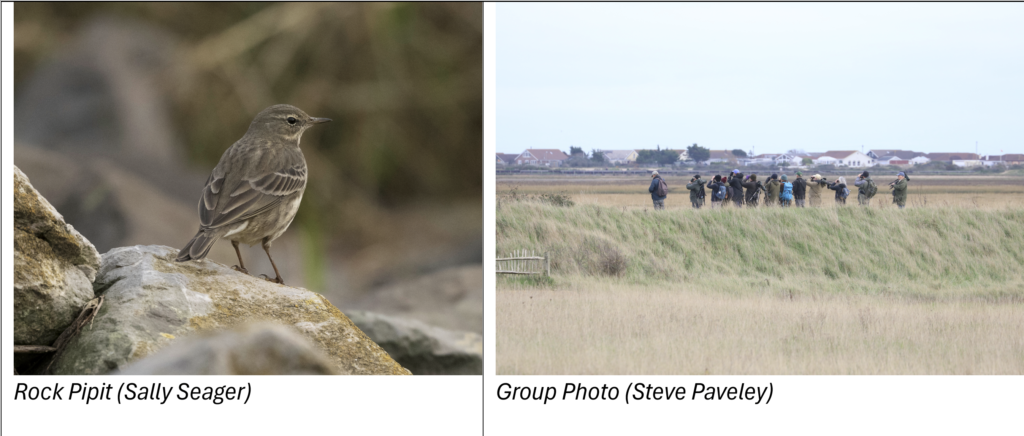
A small grey / brown passerine flew by calling and landed on the rocky shoreline – to be identified as a Rock Pipit. Heading back along the path behind the coast trail we picked up various woodland and hedgerow birds including Green Woodpecker, Song Thrush, Greenfinch, Wren and Great Tit. An excellent early spring walk in a beautiful part of the South Coast with some great birds and first class company. In total we saw and heard 43 species.
Abberton Reservoir & Copt Hall Marshes – Tues 18 February 2025
The long drive to Abberton Reservoir was worth the effort for the 15 SBC members to experience this Essex haven for wintering birds. Meeting at the Layer Breton Causeway, we immediately found the 8 Greater White-fronted Geese that had been reported over the last few days. The expected wildfowl were present along with 3 Goldeneyes (2f; 1m) plus 2 Great White Egrets around the water’s edge and with up to 4 Marsh Harriers quartering the reedbeds and surrounding farmland. Off to the Layer de-la-Haye Causeway (which is set up beautifully with a pedestrian walkway and parking off the road). There was so much to see here, with amazing views of Goosanders (up to 10 birds), and, again, all the regular wildfowl, with waders in the form of Redshank and a large feeding flock of Black-tailed Godwits. However, the highlight was to see 4 species of grebe with large numbers of Great Crested, supplemented with a couple of Little, – but of note, 2 very obliging and close-in Slavonian and 8 Black-necked in a tight flock further out. More Great White Egrets were seen with a reported 30+ at the Reserve that day! A Red Kite drifted over.
Onto the Visitor Centre and associated hides. The main hide at Hide Bay was most productive with plenty of Goldeneye, Goosander and Great Crested Grebe, but gulls were the order of the day with Black-headed, Common, Herring, Great Black-backed and 4 Caspian. We spent some time going through the large flocks of gulls and picked out the 4 Caspians, noting their long, more slender bill, flatter forehead, small black eye and whiter head than the Herring Gulls. A Ruddy Turnstone was an interesting find too! Popped by Billets Farm on our way to Copt Hall Marshes to find a really good spot for future visits where there was a huge number of birds sheltering in the bay with Ruff, Dunlin, Lapwing and a marauding Peregrine to add to the list. The final venue was Copt Hall, where a Great Grey Shrike had been residing for the last 10 days. Thinking the chances of finding it would be limited, John Darter located it within minutes! Brilliant find, with everyone getting excellent scope views of this rare winter visitor. Other birds of note, as we walked along the estuary bank, were skeins of Dark-bellied Brent Geese, a 25+ flock of Golden Plover and an obliging Stonechat.
Overall, a brilliant day with a total of 69 species seen.
Isle of Sheppey – Sunday 9 February 2025
A truly superb day’s birding with excellent views and lifers for many. 19 SBC members made the trip to the Isle of Sheppey, which during late winter, is one of the key locations in the Home Counties for both rarities and large numbers of birds. The morning and early afternoon were spent at the fabulous Elmley Nature Reserve. Huge thanks to their wardens who made us extremely welcome and helped us find some of their speciality birds.
Whilst waiting to enter the Reserve, we had a Red Kite overhead – a good start for the day. Our drive through the wilderness of open rough ground, ditches, ponds and dykes with the characteristic huge skies, was breath-taking with an enormous number of birds wherever you looked. Flocks of wildfowl – Teal, Wigeon, Shoveler, Pintail, Mallard and Gadwall wheeled around the skies as did Lapwing, Black-tailed Godwit, Dunlin and Redshank, many flushed by the large numbers of Marsh Harriers and Common Buzzards. Dark-bellied Brent, Greylag and Canada Geese were abundant across the grassy areas.
As we all parked up in the visitor car park, some had already watched a hunting Barn Owl. Thanks to the warden, Fiona, we were all soon admiring a Long-eared Owl in the scrub, with both Barn and Short-eared Owls hunting in front of us – truly magical.
The walk from the car park to the screen overlooking the River Swale and then onto the hides allowed us to see many more species – the more notable being Raven, Water Rail, Pied Avocet, Ruddy Turnstone, Eurasian Curlew, Grey Plover and Eurasian Oystercatcher. As we arrived back in the car park, Fiona was waiting for us and very kindly took us to see a very well-hidden Little Owl. Four owl species in one day!
Off to the RSPB Raptor Viewpoint next where, thankfully, the weather remained dry and not too cold. Directly next to us within a ploughed field was a flock of some 150+ Greater White-fronted Geese – we think the largest gathering recorded in Southern England this winter. Whilst our main focus was birds of prey, we had a good supporting cast of single Corn and Reed Bunting, a Common Snipe, Cetti’s Warbler, Red-legged Partridge and Water Rail. It was a great sight seeing the Marsh Harriers gathering for their late afternoon roost in the nearby reedbed with the bonus of a female Hen Harrier and a superb Barn Owl quartering the fields. A brilliant day of quality birding, seeing a total of 76 species
London Wetland Centre : Sunday 26th January 2025
We had such a good turnout (19) that we split the group into two halves so that we did not overwhelm the hides. We had found out that a Bittern had been seen that morning from the Headley Hide; so everyone went there first in the hope of seeing a Bittern. Unfortunately one did not show itself there or indeed at all for the whole of the trip. Despite this, it was an extremely good morning. It was pretty chilly, but it was not raining, and nearly everyone saw all the other target species save for the Water Pipit which was only seen by one group. No one managed to see a Snipe which was extremely unusual as, in the past, all field trips to LWC in the winter have seen that particular species. As is the case with so many field trips, we had a mixture of very experienced and new birders. This worked well and I am pleased to report that most of the new birders spotted some lifers. Quite a few of us went to enjoy the food and hot drinks in the café afterwards; so it was a great social event too.
Dukes Warren, Leith Hill, Dorking Sunday 12 January 2025
With the challenges of the weather thwarting a number of venue arrangements, 18 SBC members met at the highest point in Surrey for a stunning early morning walk through the snow. With the partly resurfaced road up to the cricket club, most were able to park by the pitch where almost immediately Goldfinch, Coal Tit and a pair of Treecreepers were seen by all. We all felt extremely privileged to be in such a beautiful setting, but all that we needed to complete the morning were some birds; but sadly they were very thin on the ground. Maybe it was the recent Arctic temperatures that had pushed the birds to lower levels or the distinct absence of food on the trees and bushes, but the lack of bird song and overhead movements were extremely unusual. An excellent spot from George found a Common Buzzard camouflaged in a tree (extremely pale breast colouration) with everyone getting good scope views. The regular calling of the Coal Tits broke the silence, but there was little bird song, although as we made our way back to the car park both Blackbird and Wren started making themselves known. Paul spotted a raptor further ahead, which was identified to be a resplendent male Kestrel; it flew in front of us and with the superb light we all managed to see its plumage – dark moustache, speckled breast, grey head and the reddish-brown back with dark-edged tail flight feathers.
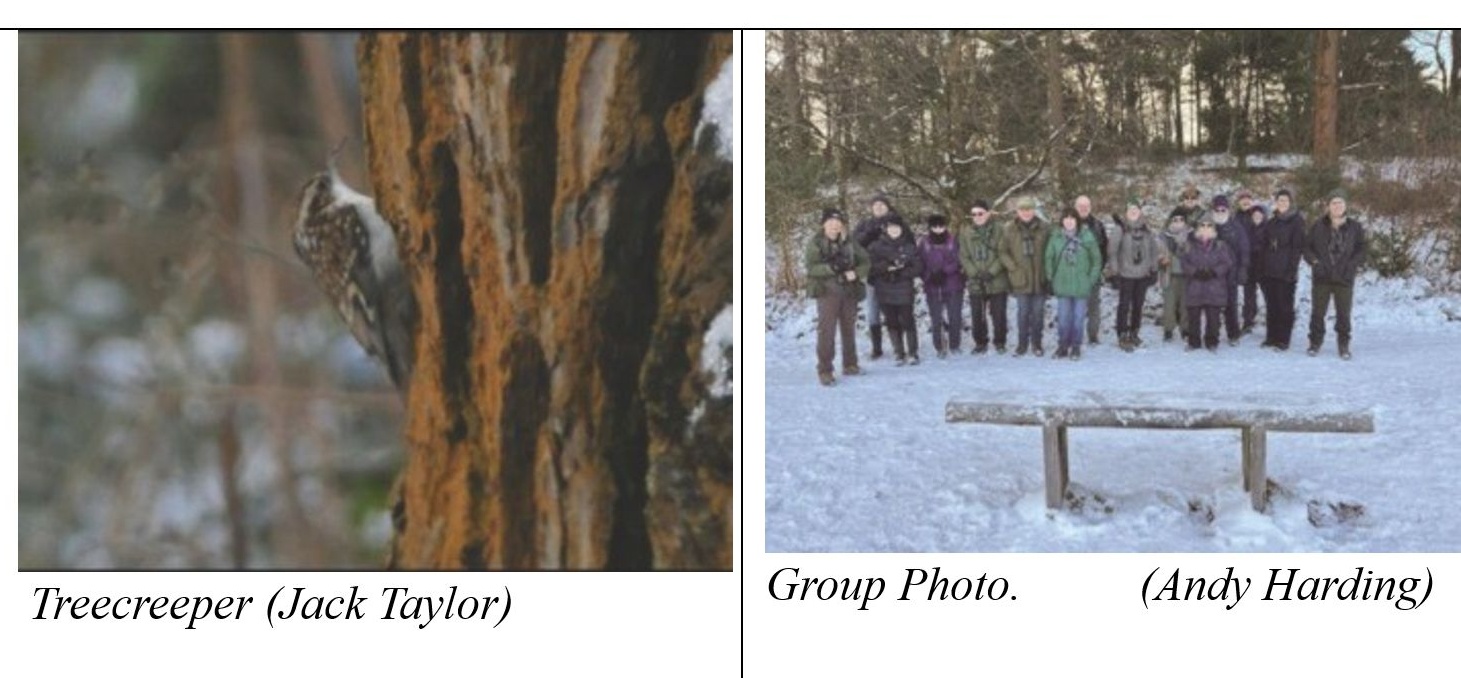
Despite the distinct lack of birds, the stunning scenery together with the first-class company made for an enjoyable first outing of 2025. In total we saw and heard 19 species:
| Stock Dove | Eurasian Jay | Great Tit | Eurasian Blackbird |
| Woodpigeon | Eurasian Jackdaw | Long-tailed Tit | European Robin |
| Common Buzzard | Carrion Crow | Goldcrest | Common Chaffinch |
| GreatSpottedWoodpecker | Coal Tit | Eurasian Treecreeper | European Goldfinch |
| Common Kestrel | Eurasian Blue Tit | Eurasian Wren | Leith Hill |
Andy Harding